Most people think they understand Cappadocia before they arrive. You see the photos. Balloons in the sky. Cave hotels. Soft, surreal landscapes. It looks simple. Almost effortless. And then you start planning.
Which town should you stay in? How many days do you actually need? Which airport makes more sense? Do you need a car? What if your balloon gets cancelled?
That’s usually where things get messy.
We’ve seen this pattern many times. Travelers come in excited, but unsure if they’re planning it the right way. Some try to do too much in two days. Some pick the wrong base. Some miss the experience they were most looking forward to.
Here’s the thing. Visiting Cappadocia is not difficult. But it’s one of those destinations where small decisions make a big difference. Think about it like this.
No Regrets Booking Advice

Cappadocia is not a single place you can “cover”. It’s a region. A mix of valleys, towns, viewpoints, and experiences spread out over a wider area than most people expect. So if you plan it like a city break, it feels rushed. If you understand how it works, it feels surprisingly easy.
In this guide, we’re not going to overload you with everything. We’re focusing on what actually matters for a first visit. The things people wish they knew earlier. The small tips that change how your days flow.
17 Practical Cappadocia Travel Tips You Should Know
Cappadocia is a region, not a single city
This is the first thing that confuses almost everyone planning their trip. You search Cappadocia travel guide, see photos, pick a hotel… and assume everything is in one place.
It’s not.
Cappadocia is a wide region in central Turkey, spread across several provinces. What most people actually visit are towns like Göreme, Uçhisar, Ürgüp, and Avanos.

But then you also have places like Derinkuyu, Kaymaklı, and Ihlara Valley, which are not next door. They require time, planning, and sometimes a car or tour.
That’s why some trips feel rushed. People plan it like a city, not a region.
Most first-time visitors stay in Göreme. It’s central, easy, and works well without a car.
If you want something quieter, Ortahisar or Mustafapaşa offer a different feel. Less busy, more local, still beautiful.
“Once you understand Cappadocia is a region, not a town, your whole plan starts to make sense.”
— Cappadocia4U Team
Want to learn more about Cappadocia’s towns and villages?
The Meaning Behind the Name “Cappadocia”

Here’s a small detail people rarely look into. The name “Cappadocia” comes from the Persian phrase meaning “Land of Beautiful Horses”. And it’s not just a historical label.
Horse culture is still part of the region today. You’ll see it in the valleys, in local tours, even in how some experiences are designed. Horseback riding is one of the more underrated ways to explore here. Slower. Quieter. More connected to the landscape.
Not everyone chooses it. But those who do usually remember it.
Cappadocia is famous for more than just fairy chimneys

Most people arrive expecting one thing. Those cone-shaped rock formations you’ve seen everywhere. Yes, the fairy chimneys are impressive. But if that’s all you focus on, you’ll miss most of what makes this place different. There’s a lot more going on.
You have valleys like Love Valley, Rose Valley, and Pigeon Valley. Each one feels slightly different, especially depending on the time of day.
Then there are the underground cities. Entire communities built below ground. You have early Christian churches carved into rock. Some still holding faded frescoes.
And small experiences like pottery in Avanos that connect you to local life.
The place is layered.
“The biggest surprise for many visitors is how diverse Cappadocia feels once they start exploring beyond the main viewpoints.”
— Cappadocia4U Team
A small tip. The same valley can look completely different in another season. Snow in winter. Green tones in spring. Warm colors in autumn.
The underground cities go deeper than most people expect

Reading about them and walking through them are two very different things. Cappadocia has dozens of underground cities. The most famous one, Derinkuyu, goes around 85 meters deep and once sheltered thousands of people.

You don’t just look at these places. You move through them. Narrow tunnels. Low ceilings. Small rooms carved into stone. It can feel tight at times. But also fascinating.
These spaces were built for protection. People lived here during periods of danger, sometimes for extended periods.
And here’s the interesting part. Not all of these cities are fully explored. Some sections remain closed. Others are still being studied. So what you see is only part of the story.
“Many visitors don’t expect how real it feels underground. It’s not a museum. It feels like a place people actually used.”
— Cappadocia4U Team
If you visit one, take your time. Don’t rush through it. It changes how you see Cappadocia above ground.
Hot air balloon rides are worth the hype

Some experiences get overhyped. This one doesn’t. The Cappadocia hot air balloon ride is one of those rare things that actually feels as good as it looks. You wake up early, still half asleep, and then suddenly you’re above the valleys watching the light change.
It’s quiet. Slow. Almost unreal. Flights run most of the year, but everything depends on weather. No wind issues, no safety concerns. If conditions are not right, flights don’t happen.
Typical flights last around 60 to 90 minutes. Baskets usually carry 12 to 28 people depending on the setup. And yes, you need to book early. Especially in peak seasons.
“The biggest mistake we see is people leaving the balloon booking too late. It’s the one experience that needs planning.”
— Cappadocia4U Team
If your flight gets cancelled, don’t panic. Try again the next morning. And if it still doesn’t work, sunrise viewpoints from the ground can still be incredible.
Want to book a hot air balloon ride?
Cappadocia has a fascinating history

You don’t need to be into history to feel it here. It shows up naturally. Cappadocia has seen many civilizations. Hittites, Persians, Romans, Byzantines. Each one left something behind.
The soft rock made it possible to carve homes, churches, and entire underground spaces. That’s why the region feels so layered.
You walk into places like Göreme Open-Air Museum and suddenly you’re inside rock-cut churches that date back centuries. According to UNESCO, this area is one of the most important cultural sites in Turkey.
Then you have Ihlara Valley, where dozens of hidden churches sit along a river path. Or abandoned settlements like Zelve and Cavusin, where entire communities once lived inside stone.
“History here is not something you read about. You walk through it.”
— Cappadocia4U Team
If you’re even slightly interested, a local guide can make a big difference. Small details start connecting.
Getting to Cappadocia is easier than it looks
At first, it feels complicated. No direct international flights. Two different airports. Transfer options. But once you understand it, it’s straightforward. You’ll fly from Istanbul to either Kayseri Airport (ASR) or Nevşehir Airport (NAV).
Kayseri is about 1 hour from Göreme. More flight options, often slightly cheaper. Nevşehir is closer. Around 30 to 40 minutes. Fewer flights, but more convenient. Both work well.
Most hotels arrange shared shuttles based on your flight time. You land, find your name, and go. Easy. You can also use taxis, private transfers, or rent a car if you prefer more flexibility.
“We usually tell travelers not to overthink this part. Both airports are fine. Just match your flight time with your schedule.”
— Cappadocia4U Team
Once you land, everything slows down quickly.
Want more details on getting to Cappadocia?
Where you stay changes your whole experience
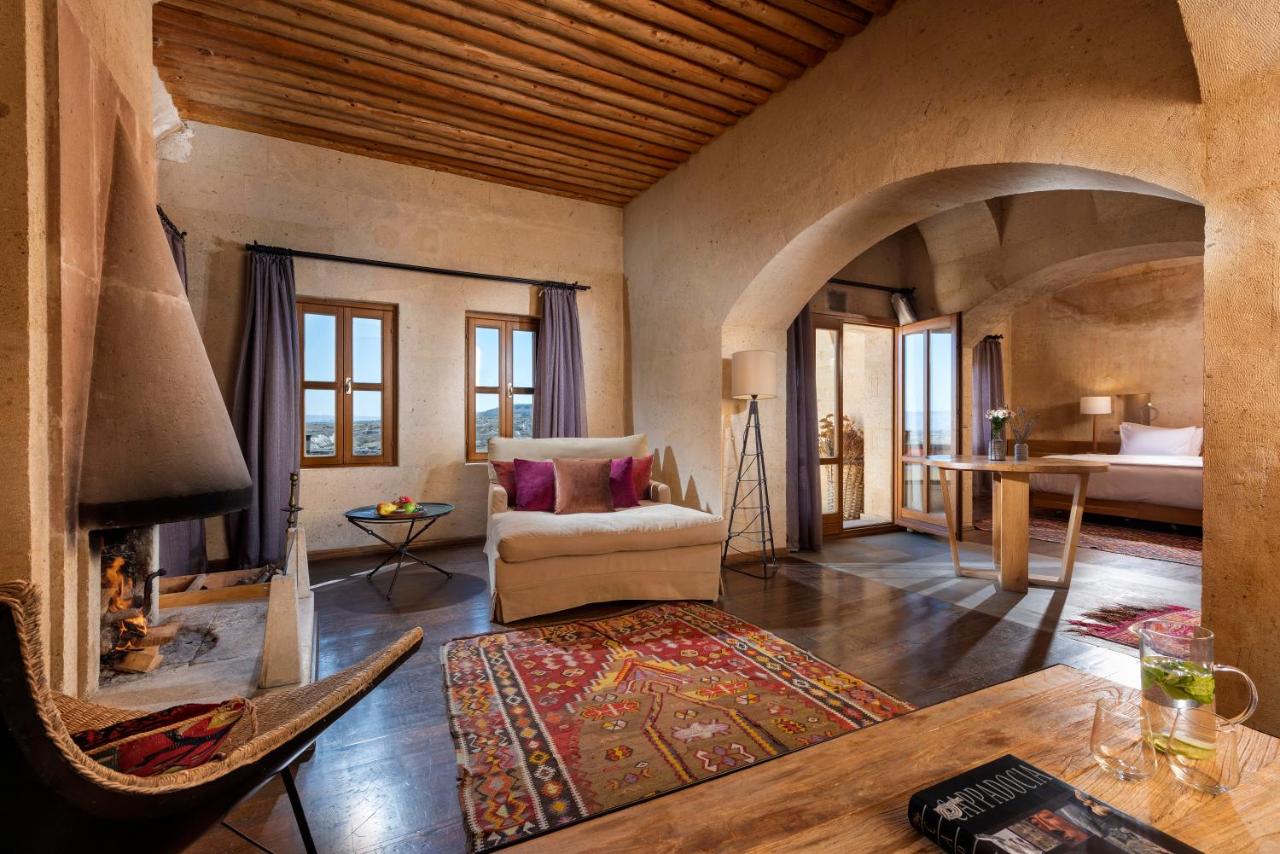
This is one of the most important decisions you’ll make. Not just for comfort. For how your trip feels. There are four main areas most visitors choose from when planning where to stay in Cappadocia.
Göreme is the easiest option. Central, walkable, close to everything. Best choice for first-time visitors. Uçhisar sits higher. Better views, quieter atmosphere, more space. Great for couples or slower stays. Ürgüp feels more traditional. Known for boutique hotels and wine culture. Avanos is calmer. Less crowded. Known for pottery and local life. And then there’s the hotel itself.
Staying in a cave hotel is not just about design. It changes how you experience mornings and evenings. Sitting on a terrace at sunrise… that’s part of the trip.
“Your hotel in Cappadocia is not just a place to sleep. It’s part of the experience.”
— Cappadocia4U Team
If it’s your first time, Göreme makes everything easier. You can explore the rest during the day.
Distances between key places are short, but not walkable
This is something many travelers misjudge at first. You look at a map, see how close everything is, and think you’ll just move around easily. Technically, yes. But practically, not always. Distances are short. Walking between them is not.
- Göreme to Uçhisar is about 5 km. Around 10 minutes by car
- Göreme to Ürgüp is about 10 km. Around 15 minutes
- Göreme to Avanos is about 15 km. Around 20 minutes
- Göreme to Derinkuyu Underground City is about 40 km. Around 45 minutes
So yes, everything feels close. But you’ll still need transport for most places. That’s why some days feel longer than expected. It’s not the distance. It’s the movement between stops.
“Cappadocia looks compact on the map, but you’ll use a car or tour more than you expect.”
— Cappadocia4U Team
If you want flexibility, renting a car gives you full control. Otherwise, tours and short taxi rides work well.
The best time to visit depends on your travel style
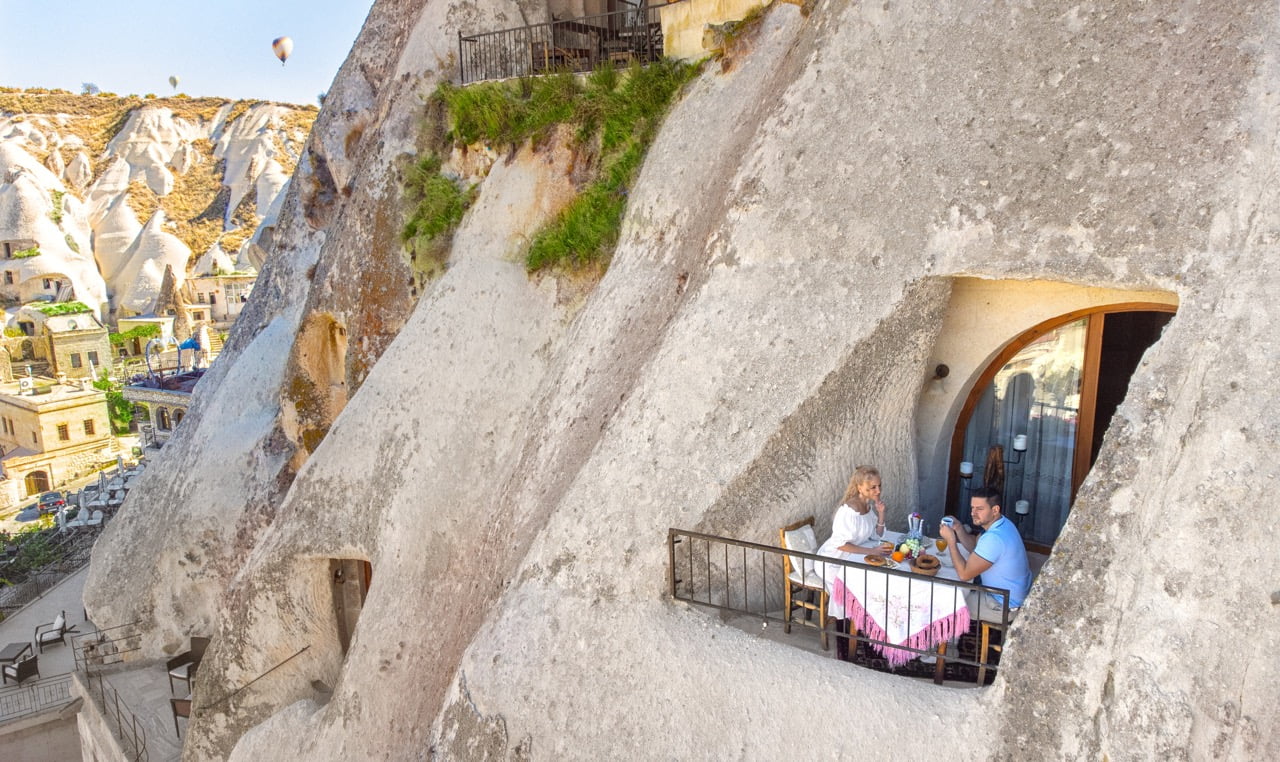
You’ll often see simple answers about the best time to visit Cappadocia. But it really comes down to what kind of experience you want. Spring, from April to June, is the most balanced. Comfortable weather, fewer extremes, good for walking and exploring.
Summer gets hot. Around 30 to 35°C during the day. But mornings and evenings are still very usable. Many activities shift to those hours anyway. Autumn feels calm. Cooler temperatures, softer light, great for photography and hiking. Winter is different. Cold, sometimes below zero, often snowy. And yes, the landscape looks completely different.
Balloon flights run all year, but winter brings more cancellations due to wind.
“Every season works. You just need to adjust your expectations and your daily rhythm.”
— Cappadocia4U Team
So instead of asking what’s best, think about what fits you.
Getting around Cappadocia is easier when you keep it simple
You don’t need to overcomplicate transport here. If your stay is short, focus on one or two areas. Trying to cover everything across the region in a day usually leads to unnecessary stress. There are a few main ways to move around. Car rental gives the most freedom. Roads are in good condition, and driving is not difficult.
Minibuses, known as dolmuş, connect main towns like Göreme, Ürgüp, Uçhisar, and Avanos. They’re affordable but not always frequent. Taxis and private transfers are easy to arrange, but costs add up if you rely on them constantly.
Then there are guided tours. Red Tour, Green Tour, sometimes Blue Tour. These cover major highlights and include transport, guide, and often entrance fees.
“Most first-time visitors end up mixing options. A tour for longer distances, walking for nearby areas.”
— Cappadocia4U Team
If you’re arriving by plane, check with your hotel. Many offer airport shuttles from both Kayseri and Nevşehir.
Weather changes quickly, so pack for variety
Cappadocia’s weather is not extreme all the time. But it does shift more than people expect. It has a continental climate. That means hot summers, cold winters, and noticeable temperature differences within the same day.
Summer can reach 30 to 35°C. Light clothing works during the day. But mornings and evenings can still feel cool. Autumn and spring are more balanced. Around 10 to 25°C. Comfortable for walking, hiking, and exploring. Winter drops below zero. Snow is common. And the landscape changes completely.
But here’s the main point.
No matter the season, mornings are cooler than expected. Especially if you’re waking up early for a Cappadocia hot air balloon or sunrise.
“Even in summer, people are surprised by how cool early mornings feel. A light jacket is always useful.”
— Cappadocia4U Team
Comfortable walking shoes matter more than anything else. You’ll be on uneven paths, rocky trails, and cobblestone streets more than you think. Dress for movement. And for change.
Must-see spots in Cappadocia

You don’t need to see everything. But you do need to choose well. Most things to do in Cappadocia lists throw dozens of places at you. In reality, a few carefully picked spots will give you a much better feel for the region. Start with the essentials.
Göreme Open-Air Museum is one of the most important sites. Rock-cut churches, faded frescoes, real history you can walk through. According to UNESCO, it’s a key part of the region’s cultural value. Uçhisar Castle gives you the highest viewpoint. You see how everything connects. Valleys, towns, open space.
Then come the valleys. Love Valley for its unusual formations. Red Valley for sunset. Pigeon Valley for its carved rock homes. Pasabag, also called Monk’s Valley, for those iconic mushroom-shaped fairy chimneys.
And then, below ground. Derinkuyu or Kaymaklı. Pick one. You don’t need both.
Zelve is another interesting stop. An abandoned cave settlement that feels frozen in time.
“Don’t try to visit every valley. Choose one or two and really experience them.”
— Cappadocia4U Team
Most of these places require entrance tickets. If you plan to visit several, a museum pass can save time and money.
Top activities you can do in Cappadocia
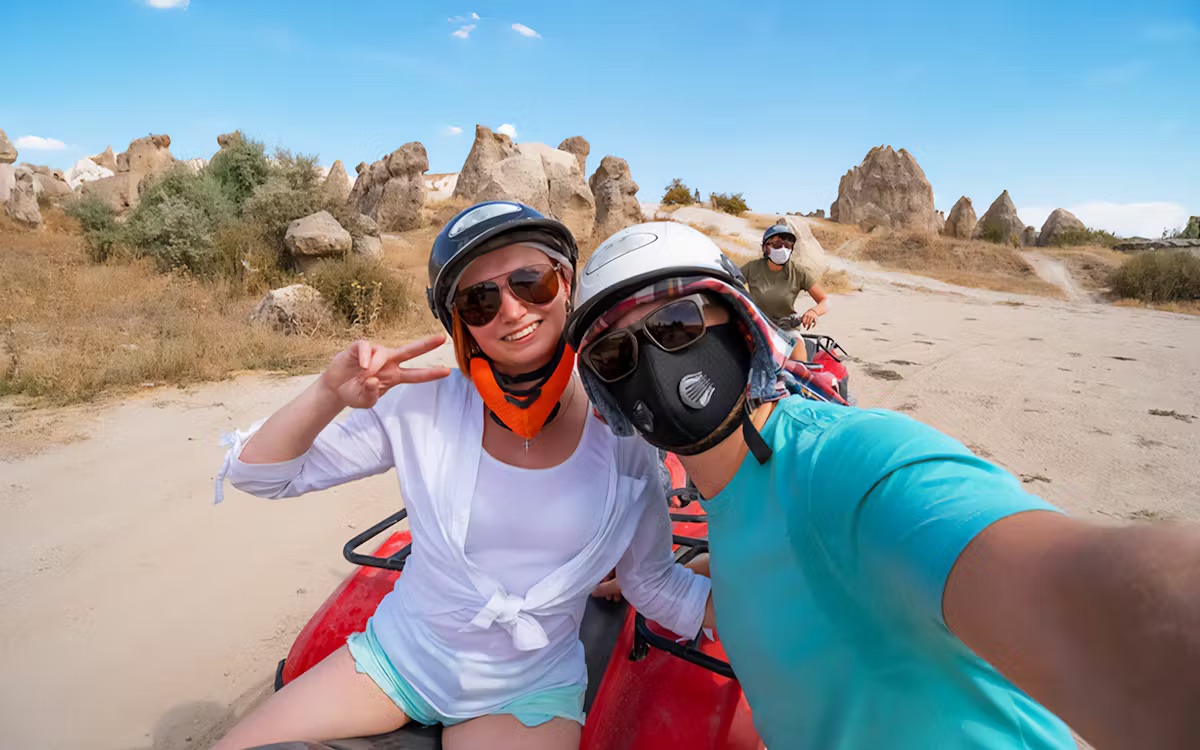
Cappadocia is not just about looking at places. It’s about how you experience them. The Cappadocia hot air balloon is the most famous one. Sunrise, wide views, slow movement above the valleys. But there’s more.
Hiking is one of the simplest and most rewarding options. Rose Valley, Red Valley, Ihlara Valley. You don’t need a guide to enjoy them. ATV tours are popular too. Dusty trails, fast routes, sunset timing. Horseback riding connects back to the region’s name, the land of beautiful horses. Slower, quieter, different perspective.
Avanos offers pottery workshops if you want something hands-on. And wine tasting is part of the region’s long tradition.
There are also cultural experiences like Turkish night shows. Food, music, dance. Some people love it, some skip it. And then there’s the Hair Museum. Unusual, slightly strange, but memorable.
“The best activities are not always the most popular ones. Sometimes a simple valley walk stays with you longer.”
— Cappadocia4U Team
Book the important ones early. Especially the balloon.
What to eat in Cappadocia

Food here is simple, but full of flavor. You’ll notice it quickly. One of the most well-known dishes is Testi Kebab. Meat and vegetables slow-cooked in a sealed clay pot. Opened at your table. It’s more than a meal. It’s part of the experience.
Then there’s local wine. Cappadocia has been producing wine for thousands of years thanks to its volcanic soil. Manti, small Turkish dumplings with yogurt and sauce, is another favorite. Rich, filling, very local.
Ürgüp meatballs, grilled and served with spices and potatoes, are simple but satisfying. And throughout the day, you’ll see dried fruits and nuts. Often served with tea or coffee.
“Meals here are not rushed. Take your time, especially if you’re sitting somewhere with a view.”
— Cappadocia4U Team
Many restaurants have terraces. Sitting there, watching balloons in the distance while eating… that’s part of the experience too.
Language and money basics
You don’t need to worry much about communication. Turkish is the main language, but in tourist areas, English is widely spoken. Hotels, restaurants, tour providers. You’ll get by easily. The local currency is Turkish Lira.
Cards are accepted in most places. Hotels, restaurants, shops. But smaller businesses and taxis may prefer cash. ATMs are easy to find in Göreme, Ürgüp, Uçhisar, and Avanos. Exchange rates are usually better in town compared to airports.
“We usually suggest carrying a small amount of cash. Not a lot, just enough for flexibility.”
— Cappadocia4U Team
It keeps things simple.
How many days do you really need in Cappadocia?

This question comes up in almost every Cappadocia itinerary plan. And the answer depends on your pace.
If you have 1 to 2 days, you can see the highlights. Göreme, a valley, maybe a balloon ride. But it will feel quick.
3 to 4 days is where things start to work better. You can explore more than one valley, visit an underground city, and not rush between places.
5 days or more is for slower travel. You revisit places, add activities, enjoy your hotel, and take breaks.
“Most first-time visitors feel that three days gives them the right balance between seeing and experiencing.”
— Cappadocia4U Team
If you’re short on time, tours help you cover more efficiently. If you have more time, slow down. That’s where Cappadocia really starts to feel different.
