Most people hear about Cappadocia and picture one thing. Fairy chimneys. Tall, unusual rock formations that don’t quite look real until you’re standing next to them. And even then, it takes a moment to process what you’re seeing. But here’s what surprises many first-time visitors. They’re not all in one place. And they don’t all look the same.
Some are clustered tightly together. Others stand alone in open valleys. Some have multiple caps. Others are shaped more simply but feel just as impressive when you’re up close.
That’s why knowing where to go matters. Because the best fairy chimneys in Cappadocia are spread across different valleys, and each location offers a slightly different experience. These formations were created over thousands of years through volcanic activity and erosion, shaping one of the most recognizable landscapes in the world.
We’ve seen travelers visit one spot, take a few photos, and move on. But the real experience comes when you explore a few different areas and start noticing the differences.
“Fairy chimneys are not just landmarks. They change depending on where you see them and how close you get.”
— Cappadocia4U Team
In this guide, we’ll show you exactly where to find the most impressive Cappadocia fairy chimneys, what makes each location unique, and how to experience them without rushing through.
No Regrets Booking Advice
What are Fairy Chimneys?
The story of Cappadocia starts long before any trail or viewpoint. The landscape you see today began forming around 60 million years ago, when volcanic eruptions from Mount Erciyes, Mount Hasan, and Mount Güllüdağ covered the region with layers of lava and ash.

Over time, these layers hardened into soft rock.
Then came wind, rain, and erosion. Slowly shaping the land, carving it down, and leaving behind the formations we now call Cappadocia fairy chimneys.
What makes them special is not just how they look.
It’s how people used them.
Because the rock is relatively soft, locals carved homes, storage spaces, and even entire underground cities into these formations. During difficult periods, they became natural shelters.
According to GoTürkiye, this combination of natural formation and human adaptation is what makes Cappadocia one of the most unique cultural landscapes in the world.
You’ll still see examples today, from abandoned cave dwellings to hotels built inside the rock.
“Fairy chimneys are not just shapes in the landscape. They are part of how people lived here for centuries.”
— Cappadocia4U Team
7 Fascinating Facts About Fairy Chimneys in Cappadocia
Once you understand how they formed, the details start to matter more. Here are a few things that make the best fairy chimneys in Cappadocia even more interesting.
- Fairy chimneys were shaped over millions of years through volcanic activity and erosion, which is why no two formations look exactly the same
- Early communities used them as natural shelters, carving homes, churches, and storage spaces directly into the rock
- Cappadocia is home to thousands of these formations, especially around Göreme, Paşabağ, and Love Valley
- Some are still in use today, with cave hotels and restored dwellings offering a chance to stay inside these structures
- Light changes everything. At sunrise and sunset, the colors shift, making them one of the most photogenic landscapes in the region
- The area is part of Göreme National Park, recognized for both its geological and cultural significance
- These formations are still changing. Erosion continues to shape them, meaning Cappadocia is not a fixed landscape
“What you see today will not look exactly the same in the future. That’s part of what makes Cappadocia feel alive.”
— Cappadocia4U Team
Video Tour
Where to See? Popular Fairy Chimneys Areas
Fairy chimneys are not limited to one single spot. They’re spread across different valleys, viewpoints, and open landscapes. That’s why the experience changes depending on where you go and how you explore.
You can walk among them, look down from a viewpoint, or even see them from above during a balloon flight. Each option gives you a different perspective.
Goreme National Park – The Heart of Fairy Chimneys
If you want to understand where most Cappadocia fairy chimneys are located, start with Göreme National Park. This is the core area of the region and has been a UNESCO World Heritage Site since 1985.
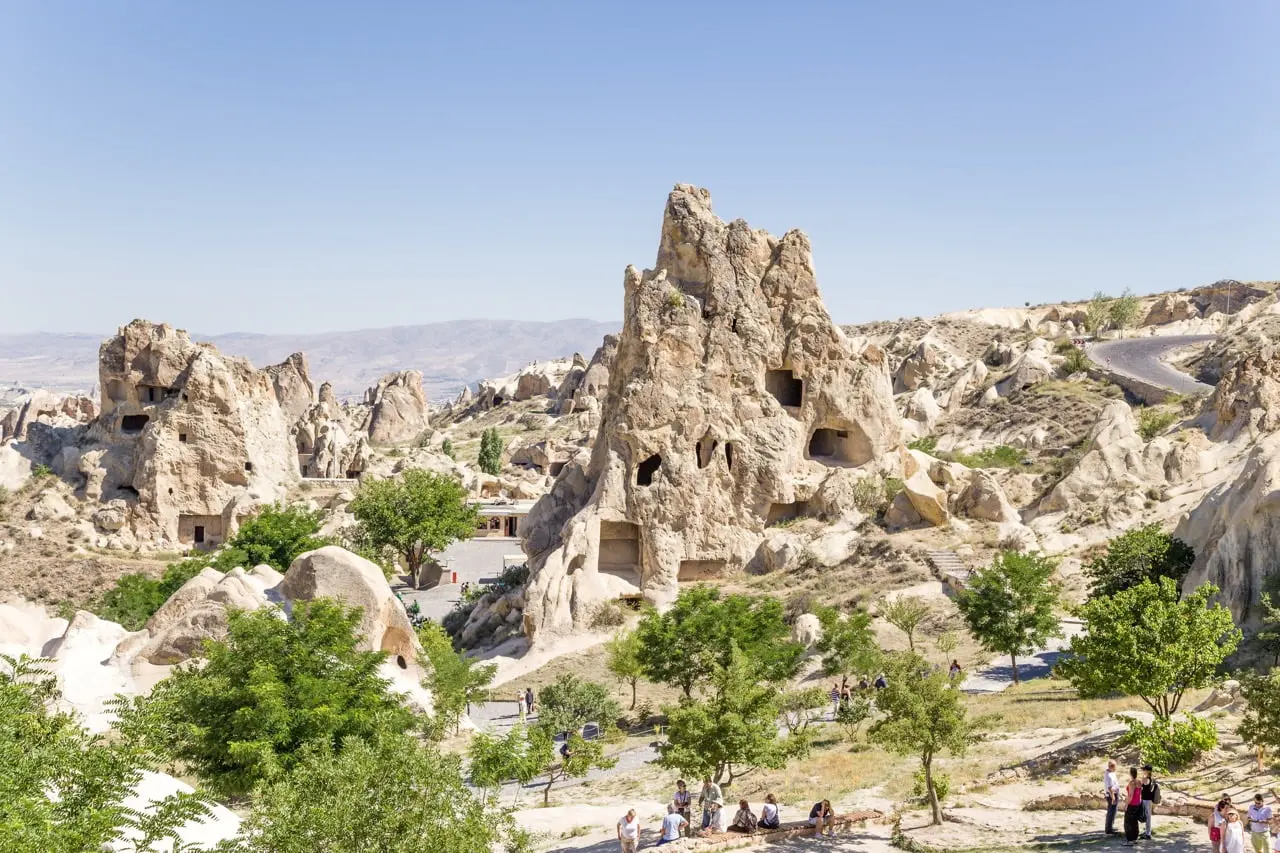
Inside the park, you’ll find multiple valleys, each with its own character. Some are known for color, others for shape, and others for historical features like cave dwellings and churches.
Many valley names come from what you see inside them. That’s why Cappadocia feels like a collection of landscapes rather than one single destination.
This protected area contains some of the most significant geological and cultural formations in Türkiye.
“Göreme is not just a starting point. It’s where everything connects.”
— Cappadocia4U Team
Walking through the Valleys

The best way to experience the best fairy chimneys in Cappadocia is on foot. When you walk through the valleys, you’re not just looking at formations from a distance. You’re moving between them, seeing how they change in size, shape, and spacing.
Some areas feel open and wide. Others feel narrow and enclosed. Along the way, you’ll also come across cave churches, tunnels, and small hidden sections that you wouldn’t notice from above.
If you don’t have much time, it’s better to focus on a few key valleys instead of trying to see everything.
“Walking through the valleys changes how you see Cappadocia. It’s no longer a view. It becomes an experience.”
— Cappadocia4U Team
Pasabag (Monks) Valley

Located between Avanos and Goreme, Paşabağ is one of the most well-known areas to see fairy chimneys up close. This is where you’ll find the classic mushroom-shaped formations with multiple caps.
Some of them were used by monks as places of retreat, and you can still see carved spaces inside certain formations, including the hermitage associated with Saint Simeon.
The area is easy to explore and doesn’t require a long hike. It’s more about walking slowly and observing the formations from different angles.
“If you want to see fairy chimneys in their most recognizable form, Paşabağ is the place.”
— Cappadocia4U Team
Read more about Pasabag Monks Valley
Red Valley
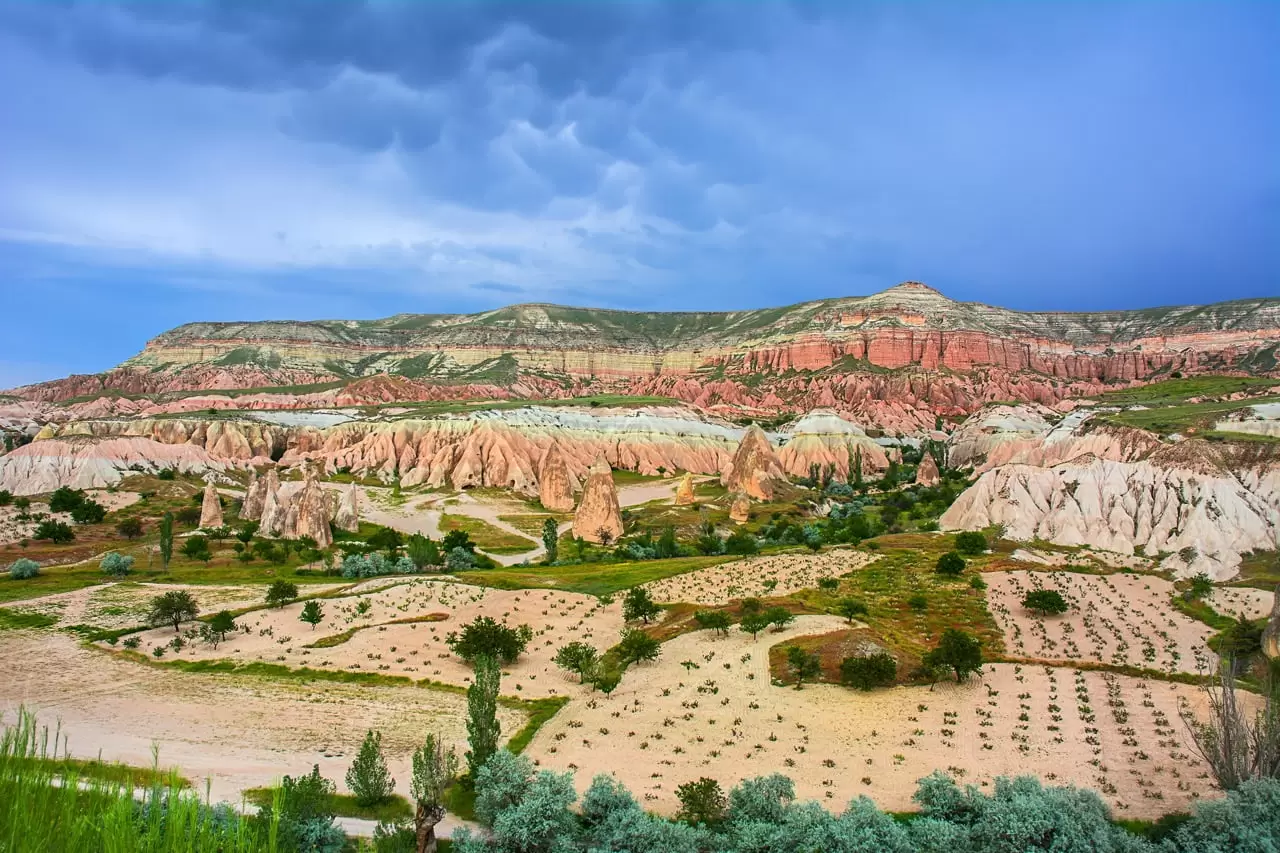
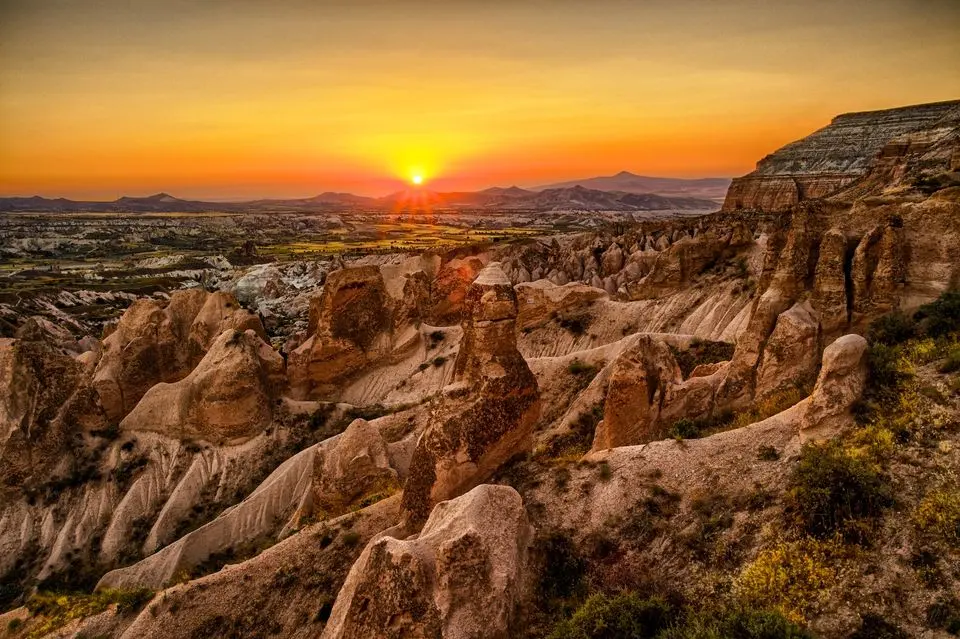
Red Valley offers a different kind of experience. The fairy chimneys here are spread across a landscape defined by red and pink tones. The color changes depending on the light, especially during late afternoon and sunset. It’s not just about individual formations. It’s about how they sit within the landscape.
The valley includes a hiking route of around 5 km, connecting areas like Çavuşin and nearby viewpoints. You’ll pass cave churches, open ridges, and sections where the valley suddenly opens into wide views.
According to GoTürkiye, Red Valley is one of the most visited areas for its unique color formations and panoramic viewpoints.
“Red Valley shows how fairy chimneys are not just shapes. They’re part of a larger landscape that changes with the light.”
Rose Valley
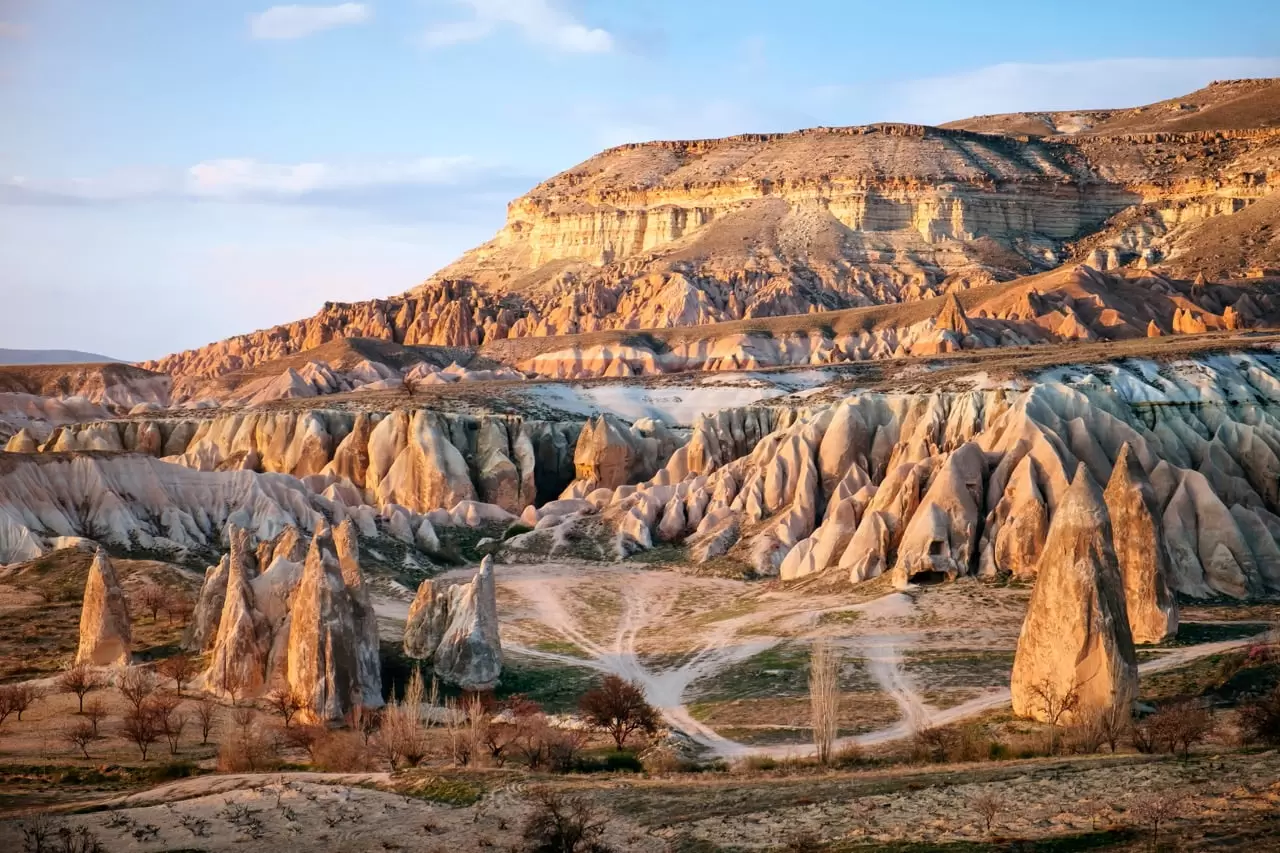
Located near Göreme, Rose Valley is one of the most balanced places to experience the best fairy chimneys in Cappadocia. It’s not the most dramatic valley at first glance. But once you start walking, you realize how much it offers. The landscape shifts constantly.
You move between soft-colored rock formations, narrow paths, and open viewpoints. The tones here are lighter, often pink and beige, which change depending on the light. It’s also one of the richest valleys in terms of history.
Along the route, you’ll come across rock-cut churches like the Ayvalı Church and the Three Cross Church, carved directly into the cliffs. These are not large monuments. They’re hidden spaces that you discover as you walk.
The main hiking route is around 4 km and can only be explored on foot. According to GoTürkiye, Rose Valley is one of the most popular hiking areas in Cappadocia due to its mix of natural beauty and historical features.
“Rose Valley is where everything feels balanced. You don’t come here for one highlight. You come for the full experience.”
— Cappadocia4U Team
Devrent (Imagination) Valley

Devrent Valley, near Avanos, is one of the most unusual places to see Cappadocia fairy chimneys. There are no trails in the traditional sense. No churches. No carved dwellings. Instead, the focus is entirely on the shapes.
The rock formations here resemble animals, objects, and figures. The most famous one looks like a camel, but once you start looking, you’ll find many more. It’s not about walking long distances. It’s about stopping, observing, and letting your imagination do the work.
“Devrent is less about exploring and more about seeing. The longer you look, the more you notice.”
— Cappadocia4U Team
This makes it one of the most creative spots for photography.
Love Valley

Stretching between Avanos and Göreme, Love Valley offers one of the most recognizable fairy chimney landscapes in Cappadocia. The formations here are tall, vertical, and spaced across an open valley. You don’t feel enclosed. You feel surrounded by space. That’s what makes this valley different from others.
It’s also one of the most popular spots for couples. The open setting, combined with sunset light, creates a softer atmosphere. At the same time, it’s used for more active experiences.
ATV and 4×4 tours often pass through the valley, giving it a mix of calm and movement depending on the time of day.
“Love Valley is where scale stands out. The formations feel bigger because there’s nothing around them.”
— Cappadocia4U Team
Panoramic Viewpoints
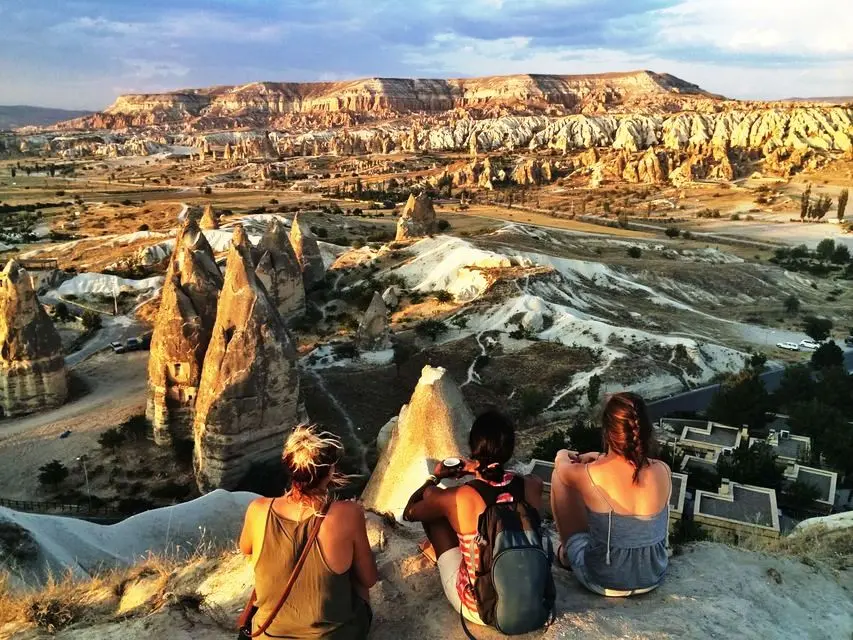
Not everyone wants to walk through the valleys. Sometimes, the best way to understand the best fairy chimneys in Cappadocia is to step back and see the bigger picture. That’s where panoramic viewpoints come in.
From above, you don’t just see individual formations. You see how they spread across valleys, how they connect, and how the landscape flows from one area to another.
It’s a different perspective.
Top viewpoints for fairy chimneys
If you want wide, open views, these are the places that consistently work:
- Göreme Viewpoint (Esentepe): Overlooks Göreme and the surrounding valleys. Easy to access and one of the best first stops.
- Red Valley Viewpoint: Strong for sunset. The light changes the color of the rock formations, making the landscape feel more dramatic.
- Lovers Hill Viewpoint (Aşıklar Tepesi): One of the most popular sunrise spots, especially when balloons rise over the valleys.
- Uçhisar Castle Viewpoint: The highest panoramic point in the region, offering wide views across multiple valleys and towns.
- Ortahisar Castle Viewpoint: A quieter alternative with views over Ortahisar and its surrounding formations.
According to GoTürkiye, elevated viewpoints like these are among the best ways to appreciate the full scale of Cappadocia’s geological formations.
“From the valleys, you see details. From the viewpoints, you understand the scale.”
— Cappadocia4U Team
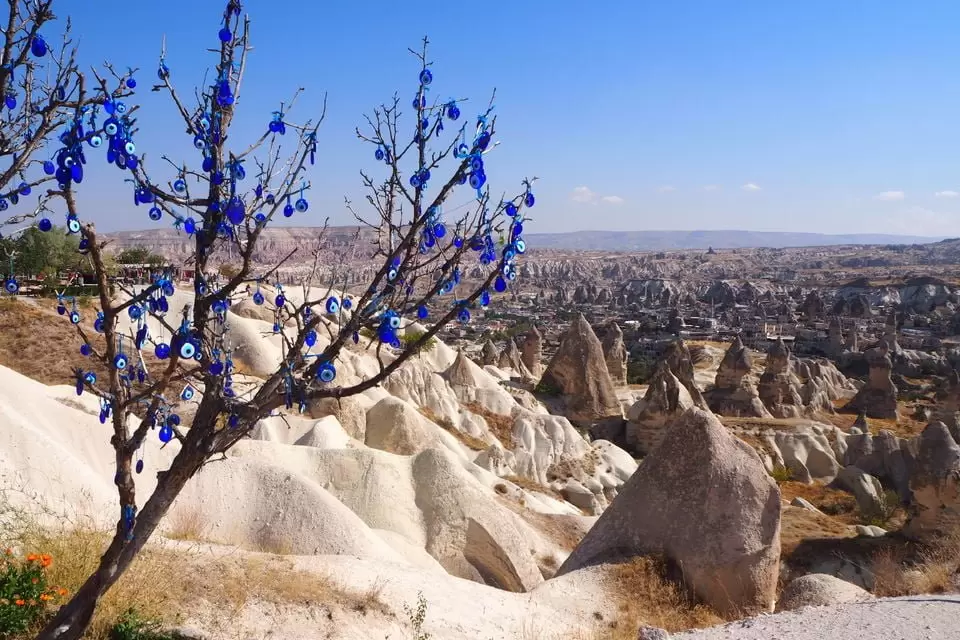
See Fairy Chimneys from the Sky: Hot Air Balloon Experience
Then there’s the aerial view. A Cappadocia hot air balloon ride gives you a completely different way to experience fairy chimneys. You’re not looking at them. You’re floating above them.

At sunrise, balloons lift from the valleys and move slowly across the landscape. From above, you see how the formations spread, how valleys connect, and how the terrain changes. It feels quiet. Slow. Almost still.
Most flights last around 60 to 90 minutes, depending on conditions. According to Cappadocia Slot Service Center, flights are carefully timed around sunrise to ensure safe and stable conditions. After landing, many tours include a small celebration, often with a traditional toast.
“From the ground, fairy chimneys feel large. From the sky, they feel endless.”
— Cappadocia4U Team
Wanna learn more about hot air balloon ride in Cappadocia? >>
Are Fairy Chimneys Worth It?
Yes, they are. But not in the way most people expect. You don’t visit Cappadocia just to look at fairy chimneys from a distance. You come here to experience how they shape the entire landscape. That’s what makes them worth it.
Standing next to a fairy chimney feels very different from seeing it in photos. The scale, the texture, and the way they’re scattered across valleys create something that doesn’t translate fully on screen. And it’s not just one location.
You’ll see different types in Paşabağ, wider formations in Love Valley, and softer, more blended shapes in Rose Valley. These formations are among the most distinctive geological features in the world, shaped over millions of years.
But the real value comes from how you experience them. Walking between them, seeing how they change with light, and noticing the small details along the way.
“Fairy chimneys are not something you tick off a list. They’re something you move through and gradually understand.”
— Cappadocia4U Team
If you visit only one spot quickly, it may feel underwhelming. If you explore a few different valleys, it becomes one of the most memorable parts of your trip.
Best Time to Visit Fairy Chimneys
Timing changes how fairy chimneys look more than location. Same place. Completely different feeling depending on light and season.
Best time of day
Early morning is the strongest option. Light is soft, shadows are longer, and in many areas around Göreme, you’ll see hot air balloons rising above the valleys. It feels calm and spacious.
Sunset is the second best choice. Places like Red Valley and Love Valley shift into warmer tones. Colors become deeper, and the landscape feels more dramatic.
Midday is the least ideal. Light is harsher, shadows flatten, and the formations lose some of their depth.
“If you see fairy chimneys at the right time of day, they feel alive. At the wrong time, they can feel flat.”
— Cappadocia4U Team
Best seasons to visit
Spring (April to June) is one of the best periods. You get milder temperatures, softer light, and a bit of greenery in the valleys. Autumn (September to October) is similar, with warmer tones and fewer crowds than peak summer.
Summer (July to August) is still popular, but heat and strong light can make midday visits less enjoyable. Winter (December to February) offers something completely different.
Snow adds contrast to the formations, and the landscape feels quieter and more open. Spring and autumn provide the most balanced conditions for outdoor exploration in Cappadocia.
Important Questions & Answers
What are fairy chimneys in Cappadocia?
Fairy chimneys are tall rock formations created by volcanic activity and erosion over millions of years. Wind and rain shaped the soft rock into the unique pillar-like structures you see today.
How were fairy chimneys formed?
Fairy chimneys were formed through a combination of volcanic eruptions, weathering, and erosion. Around 60 million years ago, volcanic activity covered the region with thick layers of ash, which hardened into tuff rock. Over time, wind and rain eroded the softer rock, leaving behind taller formations with protective basalt caps. This natural process continues to shape Cappadocia’s landscapes today.
Why are they called fairy chimneys?
The name “fairy chimneys” comes from local folklore and legends. It was believed that fairies and mystical beings lived inside these rock formations. The towering, chimney-like shapes gave rise to their fairy tale-like name. Some locals even tell myths of spirits guarding these formations, adding to their magical appeal.
Where can you see the best fairy chimneys in Cappadocia?
The most popular areas include Paşabağ (Monks Valley), Love Valley, Rose Valley, and parts of Göreme National Park. Each location offers a different style of formations and landscape.
Are fairy chimneys worth visiting?
Yes, especially if you explore more than one location. Seeing them from different valleys or viewpoints makes a big difference compared to a quick stop at a single spot.
Can you go inside fairy chimneys?
Some can be entered. In certain areas, especially older settlements, fairy chimneys were carved into homes, churches, or storage spaces. However, many are protected today and should not be climbed or entered freely.
What is the best time to see fairy chimneys?
Early morning and sunset. These times offer softer light, better colors, and fewer crowds. Sunrise is especially popular around Göreme due to hot air balloons.
How many fairy chimneys are there in Cappadocia?
There are thousands. They are spread across multiple valleys, with the highest concentration in central Cappadocia around Göreme and Avanos.
Can you hike around fairy chimneys?
Yes, and it’s one of the best ways to experience them. Many Cappadocia valleys hiking routes pass directly through areas filled with fairy chimneys, especially in Rose Valley and Red Valley.
Are fairy chimneys safe to visit?
Yes, if you follow basic precautions. Stay on marked paths, avoid climbing unstable formations, and wear proper shoes when walking through valleys.
Do fairy chimneys look different in each valley?
Yes. Some valleys have tall, isolated formations, while others have softer, clustered shapes. The experience changes depending on location and lighting.
Can you see fairy chimneys from a hot air balloon?
Yes. A hot air balloon ride offers one of the best ways to see how fairy chimneys spread across the valleys from above.
How do I get to the fairy chimney valleys?
Most fairy chimney valleys are within a short drive from Goreme, Avanos, or Uchisar. You can reach them by rental car, taxi, or guided tour. Some valleys, like Love Valley and Red Valley, require a short hike from the parking area. If you’re staying in Cappadocia, your hotel can help arrange transportation and tours.
